Skip to content

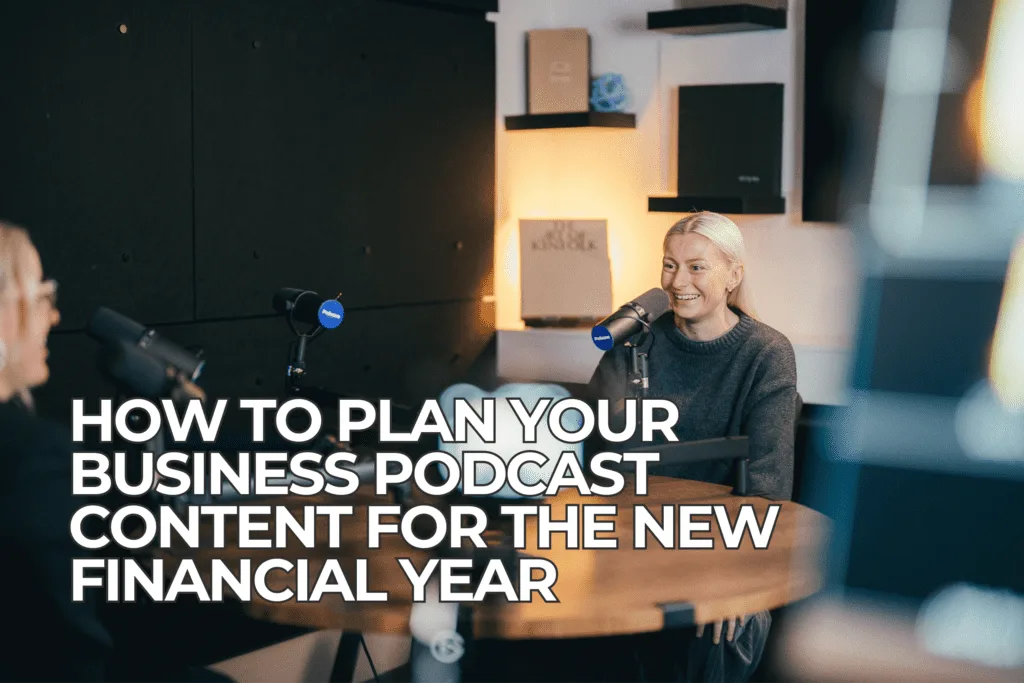

Most business podcasts that fail do not fail because of poor audio quality or an unconvincing host. They fail because the show was never properly planned. Someone had the idea, booked a studio, recorded a few episodes, and then ran out of content, consistency, or both within three months.
The new financial year is one of the few natural reset points in the business calendar. Budgets have been set. Teams are aligned on priorities. The pressure of end-of-year work has lifted. It is the ideal moment to approach podcasting the way you would approach any serious content investment: with a plan that can survive contact with a real workload.
FY27 is also a particularly good time to launch or relaunch. Australian podcast listenership continues to grow, and Perth’s business community is increasingly using audio content to build authority, attract clients, and strengthen relationships with existing ones. The businesses that will benefit most are the ones that treat a podcast as a strategic asset, not a side project.
This guide walks through the five steps we recommend to every client before they book their first session at Podwave Studios. Get these right, and you will spend far less time second-guessing yourselves in the recording booth.
Step 1: Define Your Format Before You Book
Format is the single most important decision you will make, and it is the one most businesses leave until they are already in the studio.
There are four main formats worth considering for a business podcast.
Interview. You bring in guests, typically clients, industry figures, or subject matter experts, and conduct a structured conversation. This format builds credibility through association, generates content from other people’s knowledge, and gives you a reason to reach out to people you want a relationship with. The challenge is logistics: coordinating guests, managing variable quality of conversation, and maintaining editorial consistency across different personalities.
Solo. One host. Your own voice, your own knowledge, your own point of view. This format works well for businesses with a strong individual brand or genuine expertise. It scales easily, requires no guest coordination, and can be produced very efficiently. The constraint is that it demands a confident, prepared speaker and a steady stream of original ideas.
Panel. Multiple regular contributors discussing topics together. This works best when your team genuinely has different perspectives worth hearing. It creates a more dynamic listening experience but introduces the most production complexity, particularly around scheduling and ensuring all voices contribute equally.
Hybrid. A combination of solo episodes and guest interviews. This is what we see most established business podcasts settle into over time. It gives you flexibility, allows you to batch solo content during quiet periods, and means you are not entirely dependent on guest availability to maintain your publishing schedule.
There is no universally correct answer here. The right format depends on your internal resources, the personalities involved, and what your audience actually wants to hear. But you need to make this decision before you start, not after you have recorded your first three episodes.
Step 2: Choose a Publishing Frequency You Can Hold
The biggest mistake new podcasters make is launching weekly when they should be launching fortnightly, or launching fortnightly when monthly is what their capacity actually supports.
Consistency matters more than frequency. A podcast that publishes reliably every four weeks for two years is more valuable, and more trusted by listeners, than one that publishes weekly for two months and then disappears.
The data on this is clear. Listener retention drops sharply when shows publish inconsistently. An audience that has come to expect your show on a particular day will tolerate a missed episode occasionally. They will not tolerate a show that publishes twice in one week and then goes silent for six weeks.
Before you commit to a cadence, audit your actual capacity. Consider: who is recording, who is editing (or who is managing the relationship with your production partner), who is writing show notes and social content, and who is handling guest coordination if your format requires it. Add those tasks up and work backwards to a publishing frequency you can genuinely sustain.
For most Perth SMEs and professional services firms starting out, we recommend fortnightly. It gives you enough time to prepare properly, allows for the occasional schedule disruption, and still maintains enough frequency to build an audience. Weekly is achievable for teams that have dedicated content resources or are working with a full-service production partner. Monthly works for deep-dive or research-heavy formats where each episode genuinely warrants the wait.
Step 3: Map Your Content Pillars
Content pillars are the three or four recurring themes your podcast returns to across every episode. They give your show coherence, make content planning easier, and signal clearly to your audience what the show is about and who it is for.
The best content pillars sit at the intersection of two things: what your audience wants to learn, and what your business has credibility to discuss.
A Perth based commercial law firm might anchor their show around three pillars: business structuring and risk, contract disputes and resolution, and interviews with founders on the legal decisions that shaped their companies. Every episode fits one of those three buckets. A listener who cares about one pillar is likely to care about the others.
When mapping your pillars, run each one through two filters. First: does this reflect genuine expertise or insight we can bring? Second: does this serve a specific audience problem, question, or ambition? If the answer to both is yes, the pillar is worth keeping.
Avoid pillars that are too broad to be useful. “Business” is not a content pillar. “Cash flow management for trades businesses in Western Australia” is. The more specific you are, the more useful your content will be, and the more likely you are to attract the right audience.
Three to four pillars is enough. More than that and your show loses focus. Fewer than three and you will start repeating yourself or drifting off-topic within the first few months.
Step 4: Plan Distribution Before You Record
Distribution is an afterthought for most new podcasters. It should be one of the first things you plan.
The audio file itself is only part of your content. A well-produced podcast episode can generate a short video clip for LinkedIn, a three-minute highlight reel for Instagram and Facebook, a detailed show notes page that ranks in search, an email newsletter segment, and a standalone article or thought leadership piece. Each of those assets reaches a different part of your audience through a different channel.
Before you record your first episode, decide which of these distribution formats you will actually use. Be realistic. If you do not have capacity to clip every episode for social video, plan for the episodes where you will. If you have an email list, plan how podcast content feeds into it. If you want your show notes pages to rank in search, plan to write them properly, not as a three-line summary.
The podcasts that build audiences fastest are usually the ones where the audio is treated as the source material, not the finished product. Every episode you record is an opportunity to be present on multiple platforms without creating entirely new content for each one.
We work with clients to map this out before they record anything. The result is that their first episode launches with a complete distribution plan already in place, rather than scrambling to figure out social clips after the fact.
Step 5: Set Measurable Goals for the First 90 Days
Podcasting is a long game. Most shows do not find their audience in the first month. But that does not mean you should operate without short-term benchmarks.
For the first 90 days, focus your goals on outputs and processes, not on audience size. Download numbers in the early stages of a show are rarely a reliable indicator of long-term success, and chasing them leads to poor decisions.
Useful 90-day goals might include: publishing the first four episodes on schedule, completing your show notes and SEO setup for the website, producing at least two social clips per episode, growing your listener email list by a specific number, and getting your first three listener reviews.
These are goals you can control. They build the habits and infrastructure that allow audience growth to follow. Review them at the 90-day mark and adjust for the next quarter based on what you have learned.
What a FY27 Business Podcast Content Plan Looks Like
Pull the five steps together and you have a document that covers:
Your format (interview, solo, panel, or hybrid) and the reasoning behind it
Your publishing cadence and the internal workflow that supports it
Three to four content pillars with specific episode ideas already mapped against each
Your distribution plan for each episode, including which channels and what asset types
Your 90-day goals and the metrics you will track
This does not need to be a 40-page strategy document. A well-structured one-pager or a simple spreadsheet is enough. What matters is that everyone involved in producing the show is aligned before the first recording session.
Starting a business podcast without this foundation is like launching a marketing campaign without a brief. You might produce something, but you will spend far more time correcting course than you needed to.
Ready to Record?
Podwave Studios works with Perth businesses at every stage of the podcasting process, from content strategy and format planning through to recording, editing, and distribution. Our studios in West Leederville and West Perth are purpose-built for professional audio and video podcast production.
If you are planning a podcast for FY27 and want to get the strategy right before you spend a dollar on production, book a consultation with the team at Podwave Studios