Skip to content


The best podcast guests are not always the most impressive people on paper. A keynote speaker with a polished LinkedIn profile and a long list of accolades can deliver a flat, forgettable interview. A client who has quietly built something remarkable in Perth over twenty years can make an episode people recommend for months.
Choosing guests well is a skill. It is also one of the most important decisions you will make as a business podcaster, because the wrong guest does not just produce a mediocre episode. It wastes recording time, strains a professional relationship, and can undermine the credibility your show is trying to build.
Here is how to do it properly.
The Difference Between a Good Guest and a Good Episode
These are not the same thing. A good guest has credentials, experience, and something interesting to say. A good episode requires all of that plus the ability to say it conversationally, in a way that serves your audience rather than promoting themselves.
The guests who produce the best episodes are typically those who:
- Have a specific story, not just a general area of expertise
- Can speak in plain language without reverting to industry jargon
- Are genuinely curious about conversation rather than focused on their own talking points
- Have something at stake in the topic they are discussing
Credentials matter, but they are a floor, not a ceiling. Start with credentials, then look for the story underneath them.
Three Types of Guests Worth Booking
The Client or Customer. The most underused category. A client who can speak honestly about the problem they had before working with you, the decision to engage you, and the outcome on the other side is more valuable than almost any external expert. They speak from experience, not theory. They are specific. And for your audience, who is likely facing similar problems, they are directly relevant.
The Industry Expert. Someone with deep knowledge of a subject your audience cares about. The key here is specificity. You do not want a generalist who covers the same broad strokes as every other podcast. You want someone who has spent years on one specific problem and has developed a genuine point of view on it.
The Contrarian. Someone who holds a well-reasoned position that challenges conventional thinking in your industry. These guests generate the most memorable episodes and the most listener engagement. They are also the hardest to find and require the most preparation to interview well.
How to Approach Guests Without Feeling Awkward
Most business owners overthink the ask. A direct, specific, low-pressure approach works better than a long pitch.
The message that works: name the podcast, explain briefly what it covers and who listens, mention why you thought of them specifically, and make it clear there is no obligation and no sales pitch involved. Podcast guests are not paying you or buying from you. You are offering them a platform.
What does not work: a generic template, a long preamble about your own business, or a request that asks for their time without explaining what they will get from it.
Most people who are worth having on your show are busy. Make the ask easy to say yes to.
What to Send Before the Recording
Every guest should receive a pre-interview brief at least a week before recording. This is not a script. It is a short document that covers:
- The format and approximate length of the episode
- Three to five topic areas you plan to cover
- Any specific questions you are likely to ask
- Practical logistics: studio address, parking, what to wear if it is video
- What happens after recording: editing timeline, how they will be notified when the episode is live
This brief does two things. It gives the guest time to prepare so they show up with their thinking organised. And it signals that you take the show seriously, which changes how they approach the conversation.
How to Run the Interview Without Losing Control
The biggest mistake new podcast hosts make is following questions mechanically. A good interview is a conversation. Your questions are starting points, not a script.
Two habits that make interviews better:
Follow the interesting thread. If a guest says something unexpected or particularly revealing, follow it rather than moving to your next question. The moments that produce the best episodes are usually the ones that were not planned.
Be willing to push back. Not aggressively, but honestly. If a guest gives a vague answer, say so. Ask them to be more specific. Ask what that meant in practice. Comfortable podcasters produce comfortable, forgettable interviews.
What to Do After the Episode Goes Live
The relationship with a guest does not end at the studio door. Send them the episode when it publishes. Make it easy for them to share it by providing a direct link, a short description they can use, and a social clip if you have one.
Most guests will share content that makes them look good and is easy to distribute. Do both of those things and your episode extends its reach through their network without any additional effort from you.
Over time, the guests who have had a genuinely good experience with your show become informal advocates for it. That is worth more than any paid promotion.
Ready to Book Your First Guest?
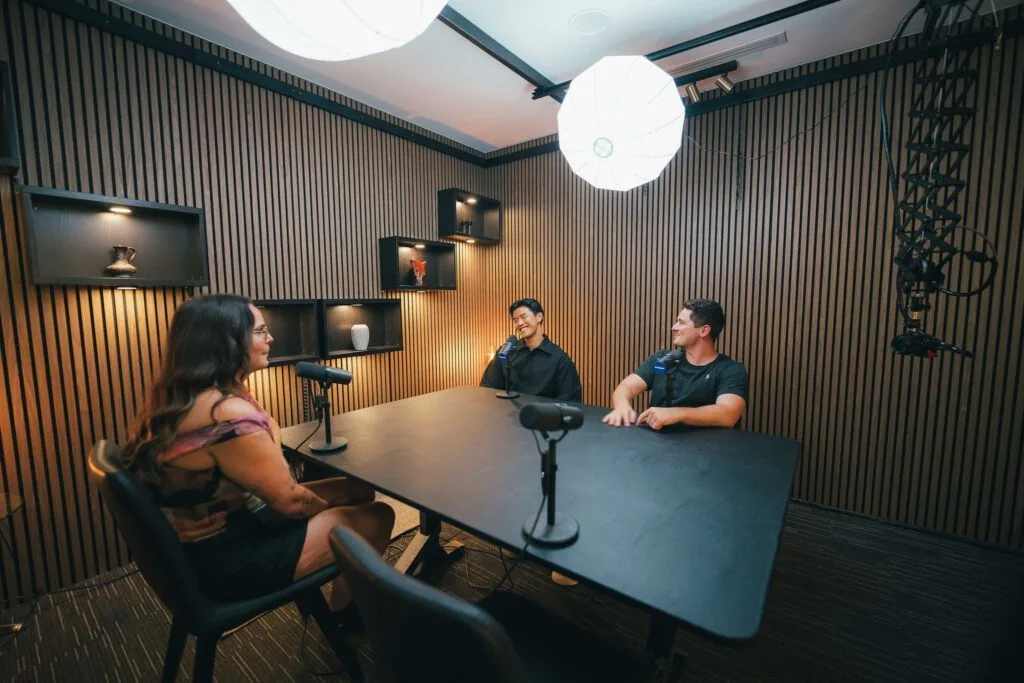
Podwave Studios in West Leederville and West Perth is set up to handle multi-guest recordings with a producer managing the session so you can focus entirely on the conversation. If you are planning your first guest episode and want to make sure the environment is right for it, get in touch with the team at Podwave Studios.