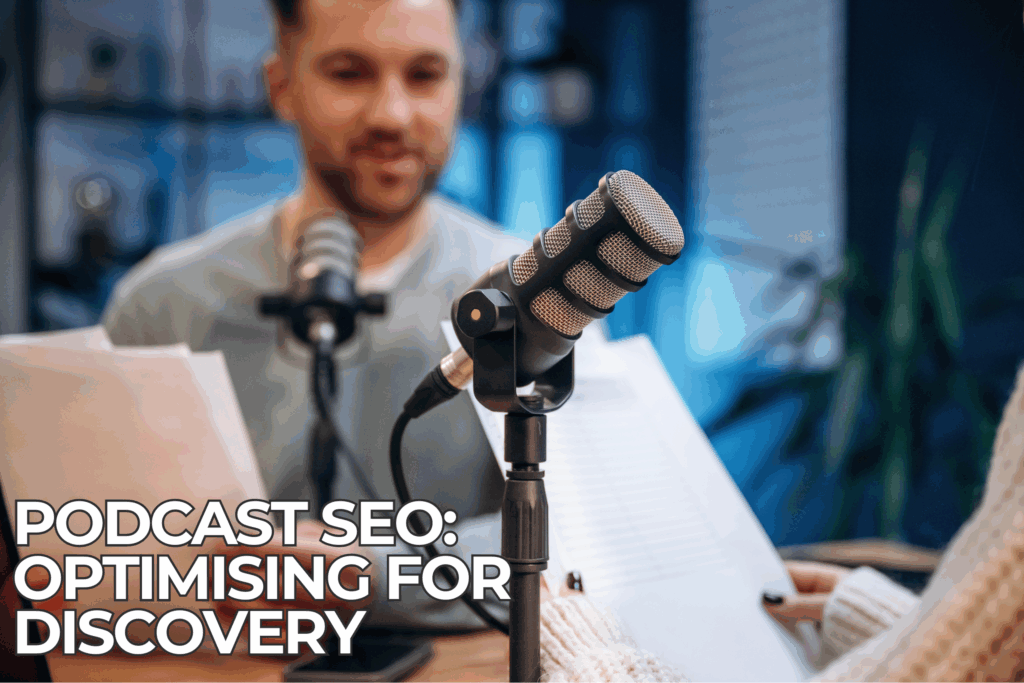

In the crowded podcast landscape, simply having great content isn’t enough. You need to be discoverable. Just like websites use Search Engine Optimisation (SEO) to rank on Google, podcasters need to use Podcast SEO to rank higher within popular podcast apps like Apple Podcasts, Spotify, and dedicated search engines.
The two most crucial elements you control for discovery are your Show Title and Show Description. Here’s your guide to optimising both for maximum impact and visibility.
1. The Power of Your Podcast Title: More Than Just a Name
Your show title is the single most valuable piece of real estate you own for SEO. It’s what listeners see first and what the directories use most heavily to index your show.
✅ Best Practices for an SEO-Optimised Title:
- Front-Load Your Primary Keyword: The further left (closer to the beginning) your keyword is, the more weight it carries.
- Bad Example: The Art of the Home Run: A Baseball Fan’s Chat
- Good Example: Baseball Strategy: The Art of the Home Run
- Better Example: Business Growth Strategy: Scaling Your Small Business with AI
- Keep it Concise (But Informative): Aim for a title that is easy to remember but clearly signals the show’s topic. Directory apps will often truncate long titles.
- Avoid Excessive Punctuation and Special Characters: While they can look creative, they often hinder searchability and appear spammy. Stick to simple separators like colons (
:) or hyphens (-). - Include Your Name (If You’re the Brand): If you are already well-known, including your name can be a powerful search term (e.g., The Tim Ferriss Show). For new podcasters, focus on the topic first.
- Don’t Keyword Stuff: Resist the temptation to cram 10 keywords into the title. It looks spammy and can turn off potential listeners. Stick to 1-3 highly relevant, high-impact phrases.
💡 Podwave Pro Tip: Treat your title as a title and a tagline. For example: “Digital Marketing Demystified: The Small Business Growth Podcast.” The title is “Digital Marketing Demystified,” and the tagline clarifies the niche and provides the SEO keywords (“Small Business Growth Podcast”).
2. Crafting the Perfect Podcast Description
The show description is your opportunity to go into detail, utilising a wider range of secondary and long-tail keywords. This text is searchable across almost all major directories and is often displayed on your RSS feed and website.
✅ Essential Elements for an SEO-Rich Description:
- Start Strong with Keywords (The First 150 Characters):
- Podcast directories prioritise the first few sentences. Make sure your core keywords (the ones you didn’t fit in the title) are here.
- Example: “Welcome to Small Business Marketing Simplified, the podcast for entrepreneurs looking for proven growth strategies. We break down SEO, social media advertising, and lead generation…”
- Identify Your Audience and Value Proposition:
- Clearly state who the show is for and what they will learn. This is crucial for both SEO and listener conversion. Use keywords that describe your target listener (e.g., “new mothers,” “aspiring coders,” “financial planners”).
- Incorporate Long-Tail Keywords Naturally:
- These are longer, more specific search phrases people use (e.g., “how to start an online business with no money” instead of just “business”). Weave these naturally into the body of the description.
- Use Descriptive Category Keywords:
- While your directory category is fixed (e.g., “Business”), use more specific descriptive terms in your text (e.g., “e-commerce,” “real estate investment,” “start-up funding”).
- Include a Clear Call-to-Action (CTA):
- Tell people what to do next: “Hit subscribe now!” or “Listen to our latest episode on X.”
- Update it Periodically:
- Your podcast evolves! Review and update your description every 6-12 months to reflect any shift in your show’s focus or to include new, relevant keywords.
3. The Forgotten SEO Goldmine: Episode Titles and Show Notes
🚀 Podcast SEO: Optimising Your Show Title and Description for Discovery
In the crowded podcast landscape, simply having great content isn’t enough. You need to be discoverable. Just like websites use Search Engine Optimisation (SEO) to rank on Google, podcasters need to use Podcast SEO to rank higher within popular podcast apps like Apple Podcasts, Spotify, and dedicated search engines.
The two most crucial elements you control for discovery are your Show Title and Show Description. Here’s your guide to optimising both for maximum impact and visibility.
What’s Your Next Step?
Are you ready to audit your current show title and description? Would you like a more detailed breakdown of Episode SEO strategies?